
Voice-first legal billing
Why voice-first is the right interface for legal billing
Legal work is mobile, fragmented, and interruption-prone. Voice capture in the moment produces better billing entries than reconstruction from memory — and CaseClock makes that capture billing-native.
Where billing quality is decided
Billing quality is decided at the moment of capture
Most legal billing quality problems begin at the same point: capture that happens too late. By the time a lawyer sits down to bill at the end of the day, the call from that morning has blurred with the review that followed it, and the meeting that came after that.
The work was real. The billable time existed. But the detail — the specific substance, the precise duration, the narrative that would make the entry clear and defensible — has already started to fade.
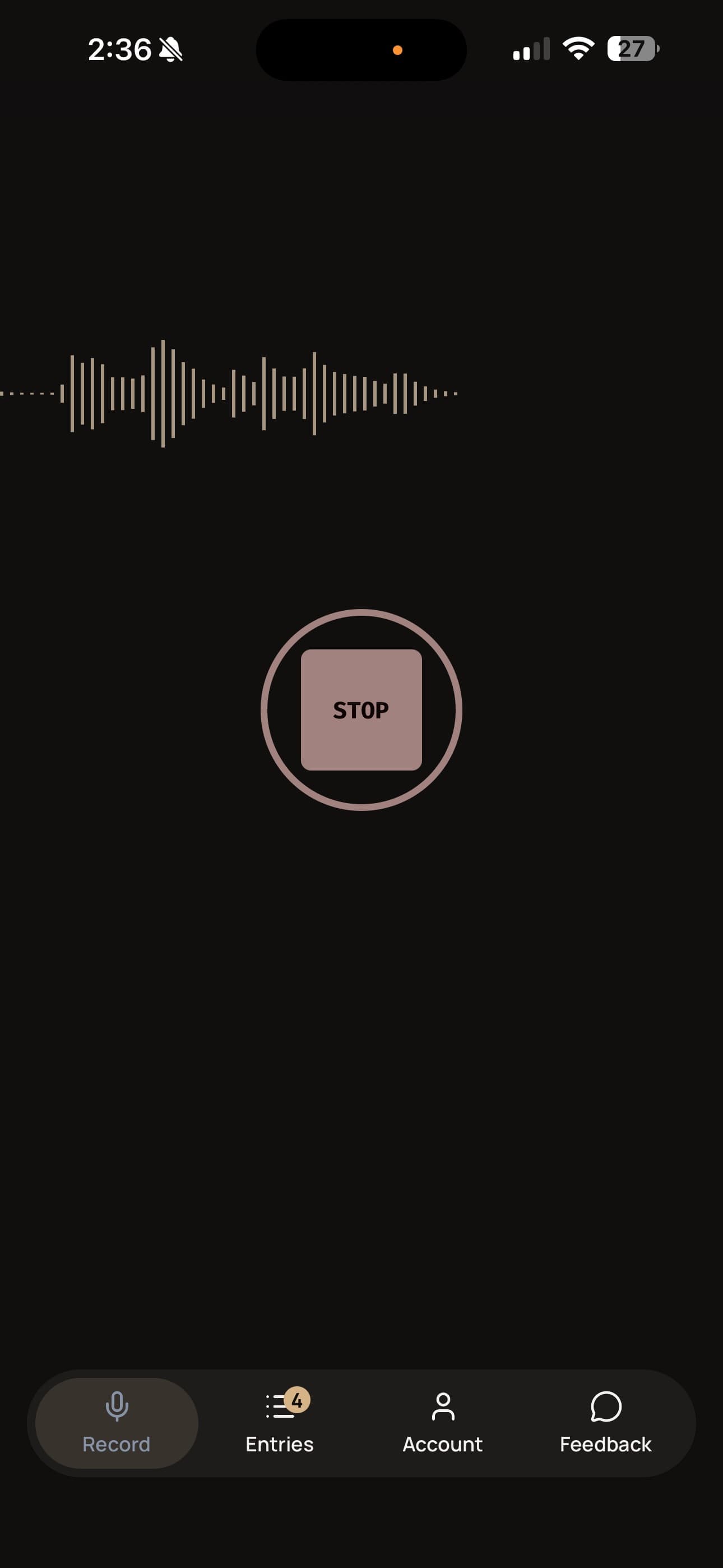
Legal work is already verbal. Lawyers spend their days speaking — on calls, in meetings, in negotiations. Voice capture meets lawyers where the work happens: immediately after a call, in the corridor between meetings, on the move between matters. Thirty seconds of voice capture right after a call preserves what a five-minute reconstruction effort at end of day cannot fully recover.
The cost of waiting
What reconstruction actually costs
End-of-day reconstruction is not a backup strategy. It is a different activity — one that requires a lawyer to rebuild context they no longer fully have. The six-minute phone call becomes "0.1 — telephone call," because the substance has gone. The corridor question becomes nothing at all, because it was never written down.
The entries that survive reconstruction tend to be the ones that were already memorable — the long document review, the hours-long negotiation. The short work is what disappears: the quick calls, the brief email reviews, the ten-minute advice that happens between meetings. That short work, accumulated across a billing year, is where the loss concentrates.
Voice capture in the moment does not require memory. The lawyer speaks the work while they still know exactly what it was. That entry is accurate, specific, and defensible — because it was captured when it happened.
Not generic dictation
Voice-first billing is not the same as dictating text
Generic voice tools turn speech into text. The lawyer still has to take that text and format it into a proper billing entry — with the right matter linked, the narrative shaped, the duration set, and the entry reviewed before it enters the billing system.
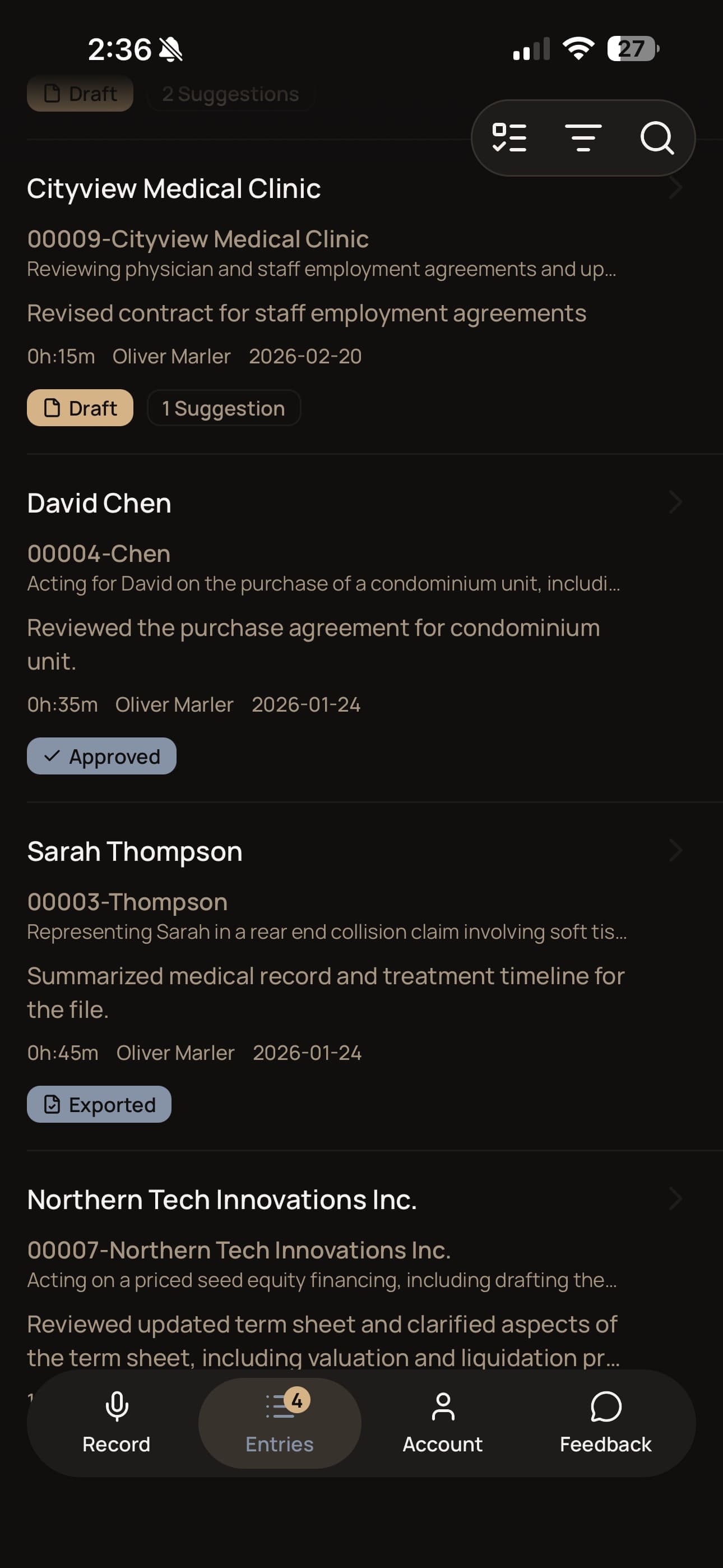
CaseClock does something different. It guides the spoken input through a billing-native workflow and produces a structured draft — not raw text. The matter is linked. The narrative is shaped for legal billing. The entry is ready for the lawyer to review and approve, not ready to be reformatted.
The moat is not voice. The moat is what happens after voice. Billing structure, workflow intelligence, and lawyer review are what turn faster input into better billable output.
Not passive tracking
Intentional capture is a different model — and a better one for lawyers
Some AI timekeeping tools work by running in the background all day — reading every document, email, browser tab, and application you touch, and inferring what was billable from that activity stream. The appeal is obvious: you do nothing and entries appear.
But that model carries real costs that are easy to overlook. Passive tools capture everything on your computer — personal research, personal browsing, personal messages — and rely on inference to sort the billable from the non-billable. For lawyers with client confidentiality obligations, firm IT policies, or personal device use, ambient tracking creates exposure that intentional capture does not.
CaseClock captures only what the lawyer explicitly records. A 30-second voice entry after a call. A note after a meeting. Nothing is captured without the lawyer's intent. That means nothing needs to be filtered out, nothing runs without your knowledge, and nothing enters your billing system without your explicit review and approval.
Capture by intent
Only what the lawyer explicitly records is captured. Nothing runs passively in the background.
No inference required
The lawyer speaks the work in context. There is nothing to infer — the substance is already in the entry.
Full approval before sync
Every entry is a draft until the lawyer reviews and approves it. Nothing reaches the billing system automatically.
“CaseClock more than pays for itself. From my first day I was capturing at least half an hour of billable time I had been missing every single day — and because entries get into our system the same day, we bill sooner and get paid sooner.”
What makes CaseClock different
Not passive tracking. Not generic dictation. Built for legal billing.
Not passive tracking
Passive tools run in the background, inferring activity from emails, calendar events, and application usage. CaseClock is intentional capture — the lawyer speaks the work, in the moment, while context is clear. The entry reflects billable intent, not inferred activity.
Not generic dictation
Generic voice tools turn speech into text and leave the lawyer to format that text into a proper billing entry. CaseClock produces a structured, billing-native draft directly from the spoken input. The difference is in what happens after capture — billing structure, matter context, and a review step that generic dictation never reaches.
Built for legal billing
CaseClock is not a general-purpose voice tool adapted for law. It is purpose-built around what legal time entries need to contain, how billing narratives should be structured, and how lawyers need to review and approve entries before they move into the billing system.
See voice-first legal billing in practice
Available to participating law firms and organizations. Capture your first entry in minutes.