
Automating Legal Billing Workflow for Small Law Firms
August 26, 2026
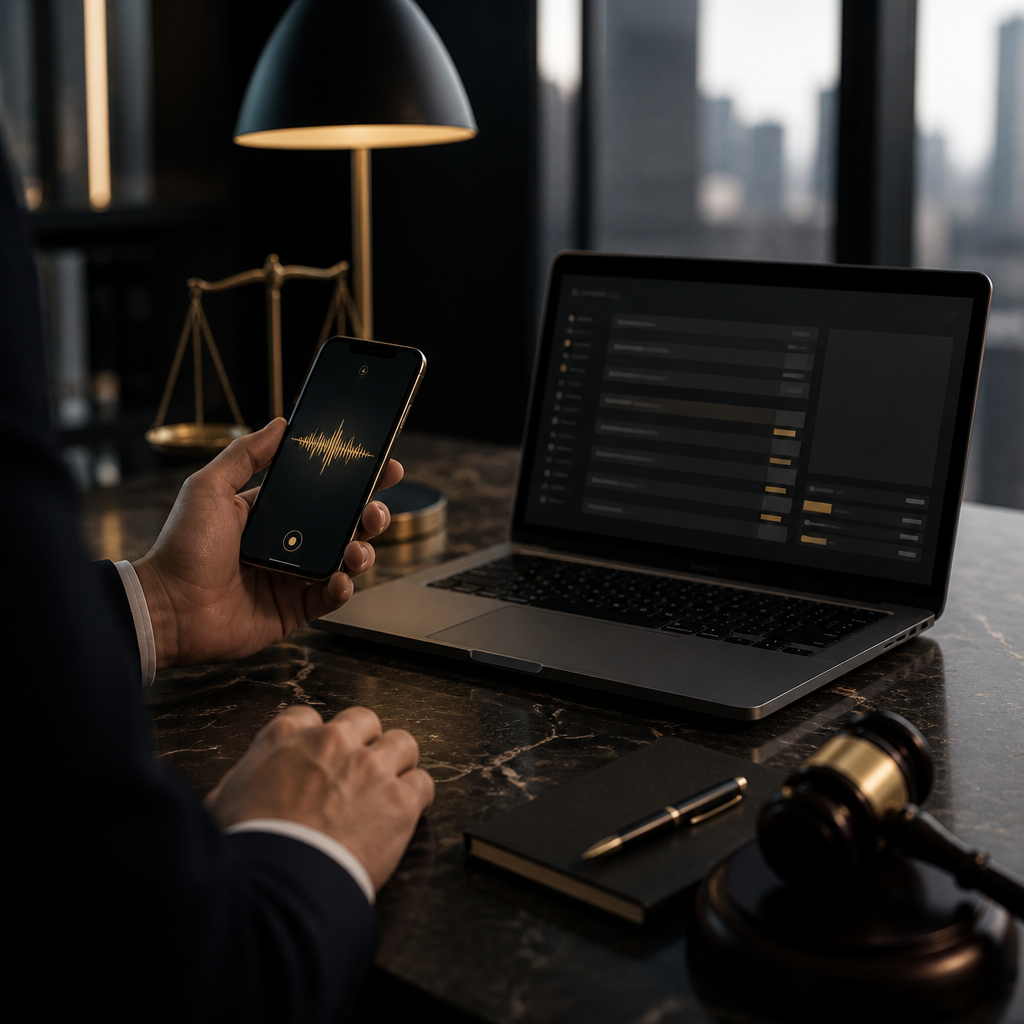
For small law firms, manual billing is often an administrative bottleneck that leads to lost revenue. Automation is not simply about digital invoicing; it is about building a connected sequence that captures billable activity at the source and moves it through to final payment without manual reconstruction.
The Continuous Capture Model
The most effective way to automate the billing workflow is to implement a continuous capture model using AI-validated time entries. Manual entry often results in a 10% to 20% loss in recorded time because attorneys struggle to remember short tasks performed throughout the day. By using voice-first legal billing and automated triggers, firms can capture these moments instantly.
Workflow Components
| Stage | Mechanism | Outcome |
|---|---|---|
| Activity Capture | Email, Call, and Document Triggers | Real-time billing draft creation |
| Validation | AI Time Entry Review | Accuracy and compliance checking |
| Integration | Practice Management Sync (e.g., Clio) | Seamless transfer to matter files |
| Review | Structured Billing Drafts | Rapid attorney approval of pre-bills |
Implementation Steps for Small Firms
To automate successfully, firms should focus on three primary areas:
- Voice-First Billing: Attorneys can dictate entries immediately following meetings or court appearances, ensuring the narrative is accurate and the time is captured before it is forgotten.
- AI-Validated Entries: Automation tools should analyze activity signals from document edits and communications to draft time entries. This reduces the burden of starting every entry from a blank screen.
- System Integration: The automation layer must integrate directly with practice management systems. In regions like the United Kingdom, United States, and Australia, integrating with platforms like Clio allows the firm to manage the entire lifecycle from capture to collection in one environment.
Recovering Billable Time
Small firms that automate their billing workflow typically see an immediate recovery of billable hours that previously went uncaptured. By removing the friction of manual entry, the firm shifts its focus from forensic reconstruction of the week's work to high-value legal strategy and research. This automation ensures that the firm remains profitable and efficient while maintaining high standards of billing accuracy.
Frequently Asked Questions
Can automation work for firms with diverse practice areas? Yes. AI-validated capture is designed to recognize and categorize various legal activities, making it suitable for any practice area that bills hourly or uses hybrid fee structures.
Does this replace existing practice management software? No. Effective automation acts as a layer that enhances existing systems like Clio by automating the capture and review phases before the bill is finalized.
Is this available for international firms? CaseClock.ai supports legal professionals in the United States, Canada, the United Kingdom, Australia, and New Zealand.