
Automating Legal Billing Workflow for Small Firms
August 26, 2026
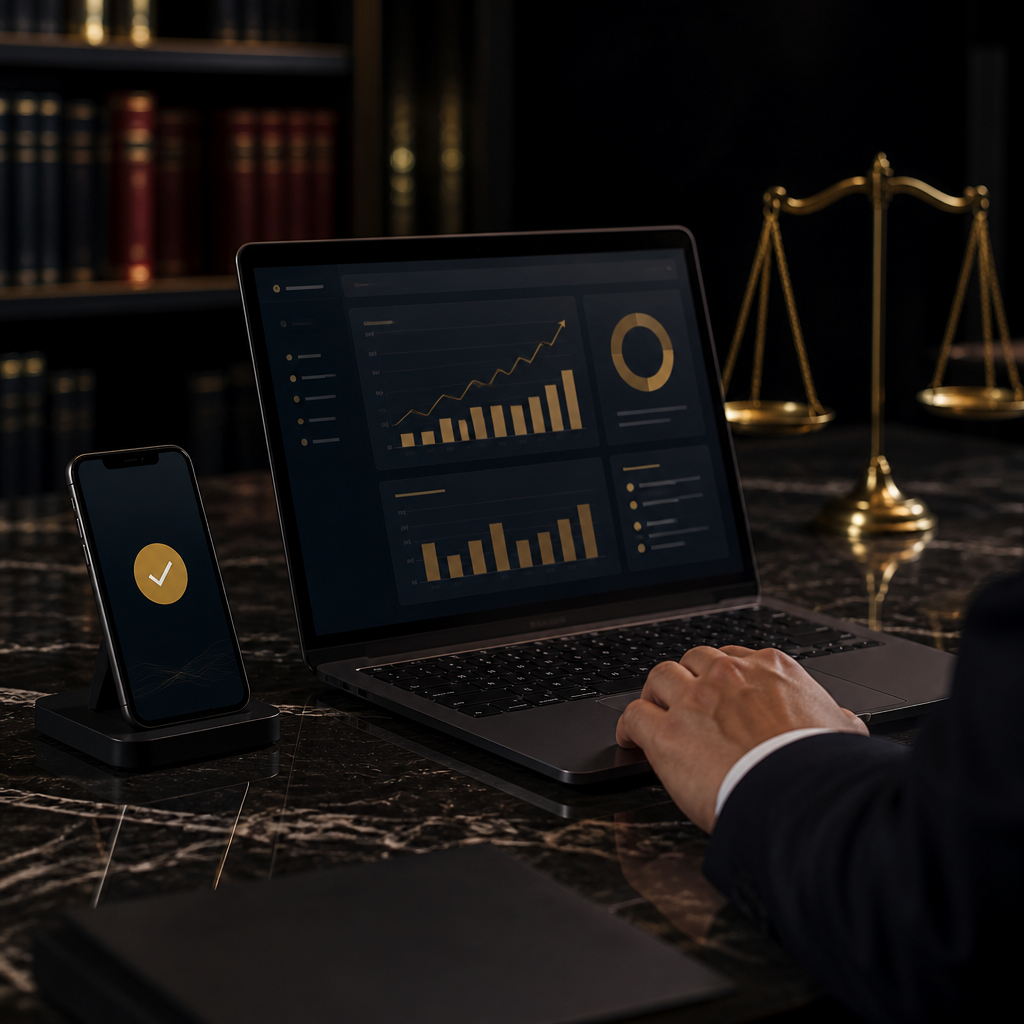
Automating the legal billing workflow is no longer just a convenience; it is a financial necessity for small law firms seeking to maintain competitive margins. According to industry reports, many firms collect only a portion of their worked time because the administrative burden of manual tracking leads to significant revenue leakage.
The Anatomy of an Automated Billing Workflow
A successful automation strategy replaces manual data entry with activity-based triggers. This process is structured around four primary stages:
- AI-Driven Time Capture: Instead of manual logs, the system monitors billable signals – such as drafting a document or responding to a client email – and generates a time entry prompt for the attorney to validate immediately.
- Structured Billing Drafts: Approved entries are automatically mapped to the correct matter within your Practice Management System (PMS), such as Clio. This creates a consistent flow of data that is ready for review at any time.
- Automated Pre-Bill Review: Once a billing cycle trigger is met, pre-bills are compiled and routed to the responsible attorney. This eliminates the need for paper-based revisions or manual spreadsheets.
- Electronic Delivery and Collection: Invoices are sent via secure portals with integrated payment links. Automated reminders can then be scheduled for unpaid invoices, ensuring cash flow remains steady.
Integration Requirements
For this workflow to be effective, your billing software must support seamless integration with existing tools. This includes:
- Practice Management Systems: Centralizing case data.
- Voice-first Technology: Allowing for entries to be made on the go.
- Secure Payment Processors: Facilitating instant trust reconciliation.
Comparison: Manual vs. Automated Workflow
| Feature | Manual Process | Automated Workflow |
|---|---|---|
| Entry Accuracy | Relies on memory | Triggered by real-time activity |
| Recovery Rate | 10-20% leakage | Near-total capture |
| Billing Cycle | Monthly/Delayed | Continuous/Milestone-based |
| Admin Time | High (Days) | Low (Minutes) |
FAQ
How does AI capture time without violating privacy? AI billing tools like CaseClock.ai act as a secure layer over your communication tools, only identifying meta-data related to matter numbers and timestamps to prompt for validation.
Can this work with Clio? Yes, AI-validated time entry systems are designed to integrate directly with Clio to bridge the gap between attorney activity and the final invoice.